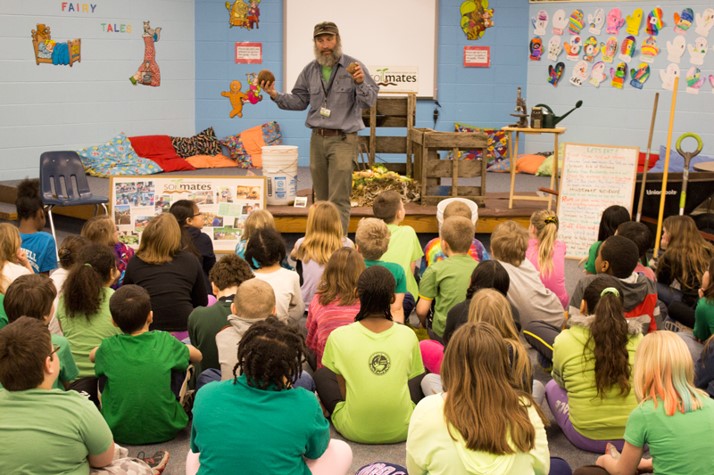
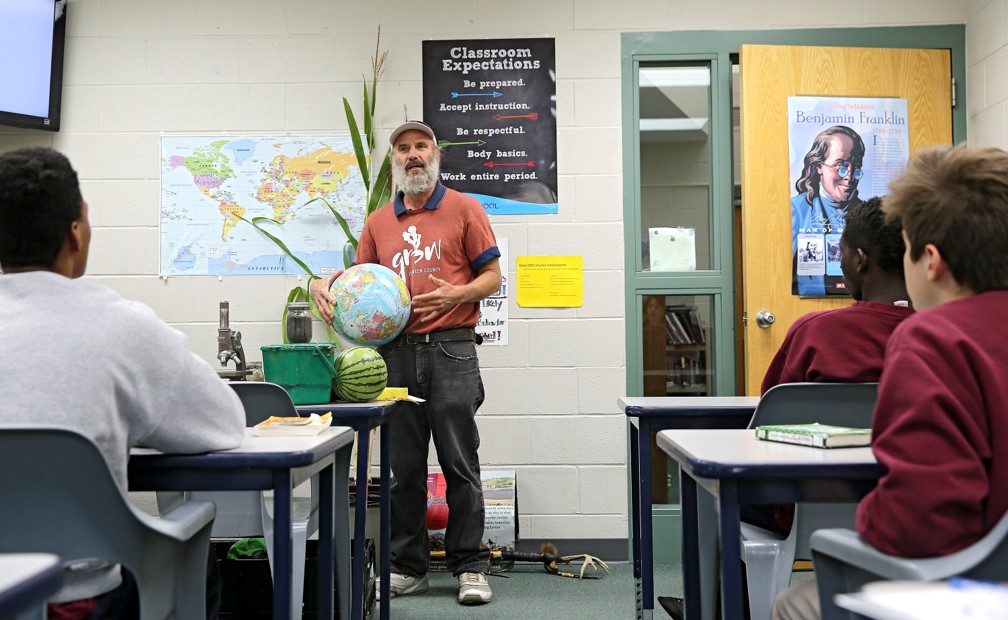
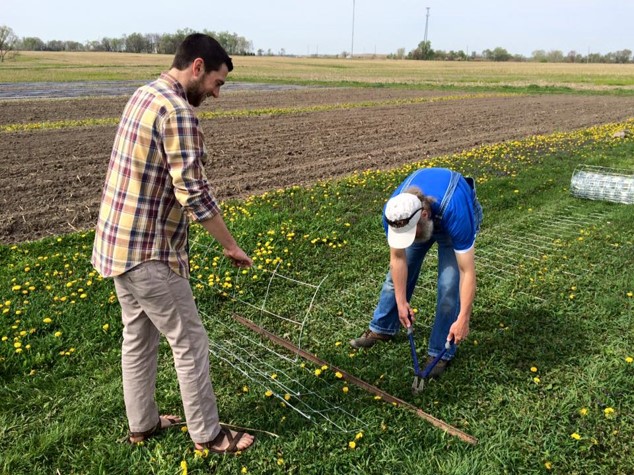

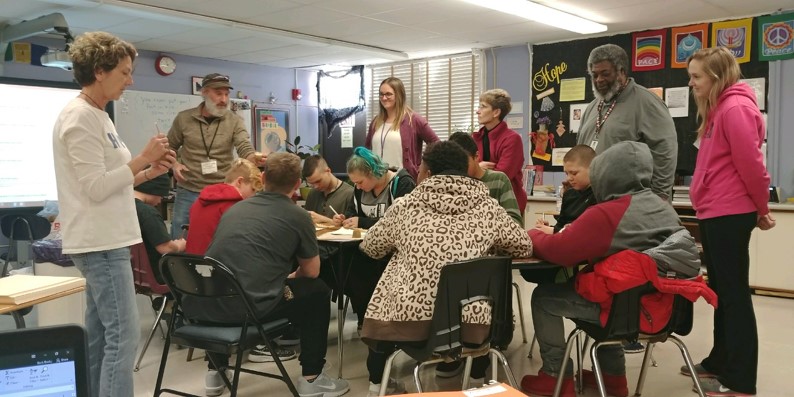
The 60-90 minute format of Garden Bridge involves the following content and activities each class:
- Introductory concepts reinforced: Food as common ground in a polarized world, and asking ourselves “What are we ingesting?” (Is it helpful or harmful?); Roots as Routes (multiple path options that feed the plant & person); The lesson of compost = transforming old life into new life; Discerning what we can and cannot control as a means of examining emotional energy use; Nature Deficit Disorder
- Focus on any or all of these twelve life skill themes: Hope, Balance, Patience, Respect, Resilience, Nurturance, Healthy Choices, Trust, Humility, Listening, Gratitude, Peace (addressing anger management, conflict resolution, anxiety/stress, fear).
- Definitions: I begin by sharing the formal definition of, and my struggle with, the respective life skills. The words are posted on a whiteboard as we gather in a circle. Concrete examples are provided of how gardening can help nurture each life skill. Participants can share (but are not expected to if they don’t feel comfortable doing so) their own definitions and stories in a judgment-free space.
- Participants are encouraged to choose at least one of the life skills as a personal goal that is characterized as a “seed.” Seeds need four elements – sun, soil, air and water – to grow, and we therefore identify four actions that will be needed to grow one’s goal on a personal garden map (a sheet of paper).
- Powerpoint pictures are shared of many school and community garden designs.
- In season (April through October), when classes are available at garden sites outdoors, participants can either observe or assist in simple garden bed maintenance (watering, weeding, harvest). Regardless of season, basic garden education is referenced (soil preparation, seed sowing, transplanting, mulch, hydration, pest monitoring, proper spacing, companion planting). Classes in fall and winter, of course, are only verbal exchanges held indoors (with the exception of a seed germination demonstration for spring transplants (tomato, pepper, greens, herbs, flowers) that can be started indoors on a southern-faced window sill).
- Tasting samples of seasonal vegetables can be offered.
- Other potential activities throughout the growing season: seed-saving, crafts, journaling.
Each class models talk therapy methods; time is devoted to each aforementioned component and is dynamic, not static. Depending on the often unique contexts and needs expressed in each session, the flow of messaging & activities must remain flexible.
 gardenbridgeoutreach.org